
You’ve probably seen a completely transparent lollipop, a sphere that looks like glass, or a pastry decoration with an icy effect. Although they look like glass, many of these creations are made with isomalt.
Isomalt is one of the most widely used ingredients in creative confectionery because it allows you to make lollipops, candies, and transparent decorations with a shiny and eye-catching finish. But what exactly is it? Is it sugar? Where does it come from? Let’s take a simple look.
What is isomalt?
Isomalt is a polyol, also known as a sugar alcohol, used as a sugar substitute in various food products. While the term “sugar alcohol” might sound a bit odd, it has nothing to do with the alcohol in beverages: it contains no ethanol and produces no effects.
In the European Union, it is identified by the code E953 and is authorized as a food ingredient. It not only provides sweetness but also volume, structure, and hardness, qualities that make it particularly interesting for candies and decorations. Unlike sweeteners such as saccharin, stevia, or sucralose, isomalt has body and occupies a volume similar to that of sugar, so it can be the main component of a lollipop or a decorative piece.
Where does isomalt come from?
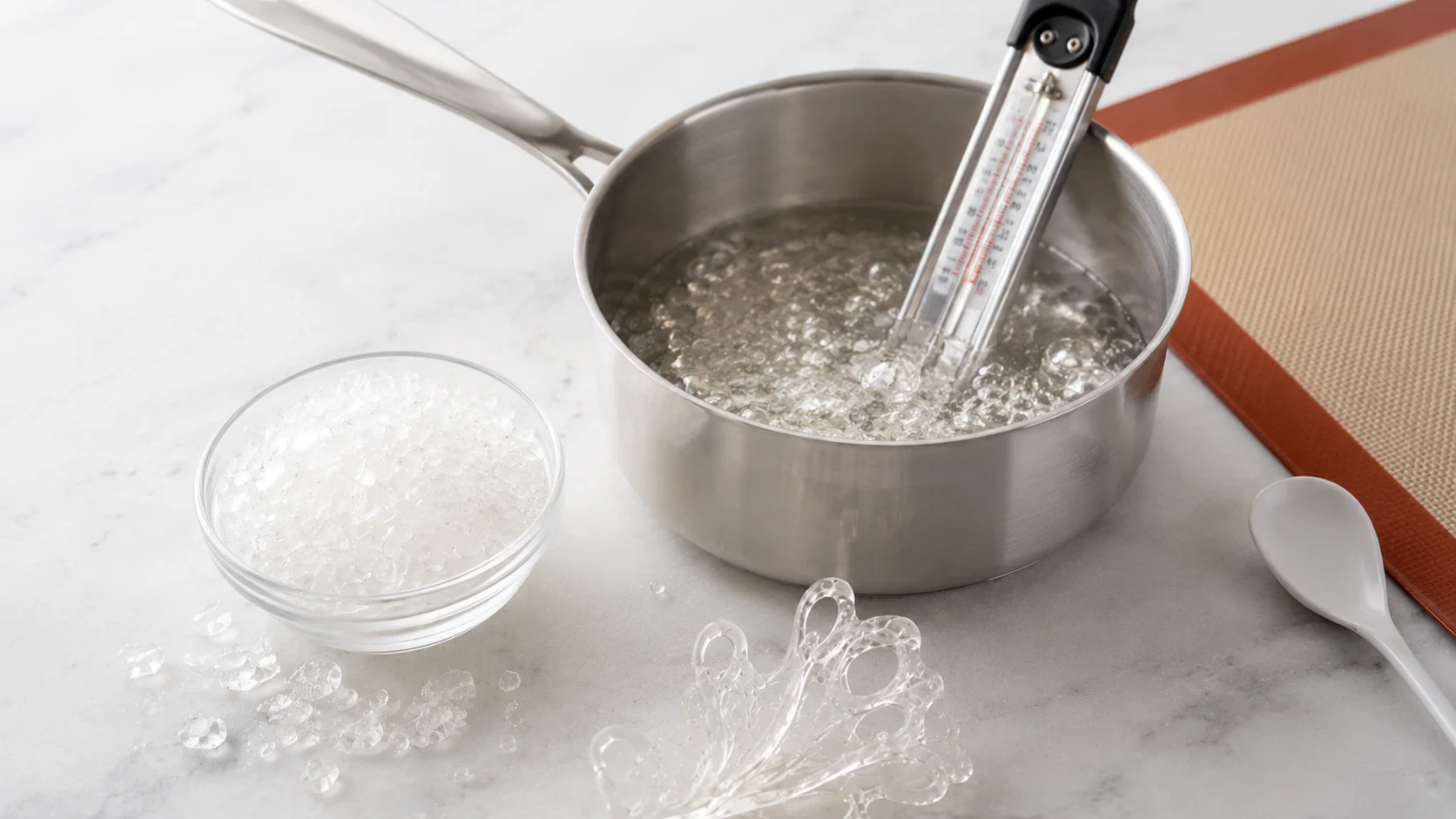
Isomalt is manufactured from sucrose, that is, common sugar, usually obtained from sugar beets or sugar cane. During its manufacture, it undergoes two transformations: first, sucrose is converted into isomaltulose through an enzymatic process, and then that isomaltulose is hydrogenated to obtain isomalt.
You don’t need to learn these names to work with isomalt. The important thing is to understand that, although it comes from sugar, the final product is no longer sucrose and behaves differently: it usually sweetens about half as much, allowing for attractive and appealing pieces without being overly sweet.
Is isomalt sugar? Is it a natural ingredient?
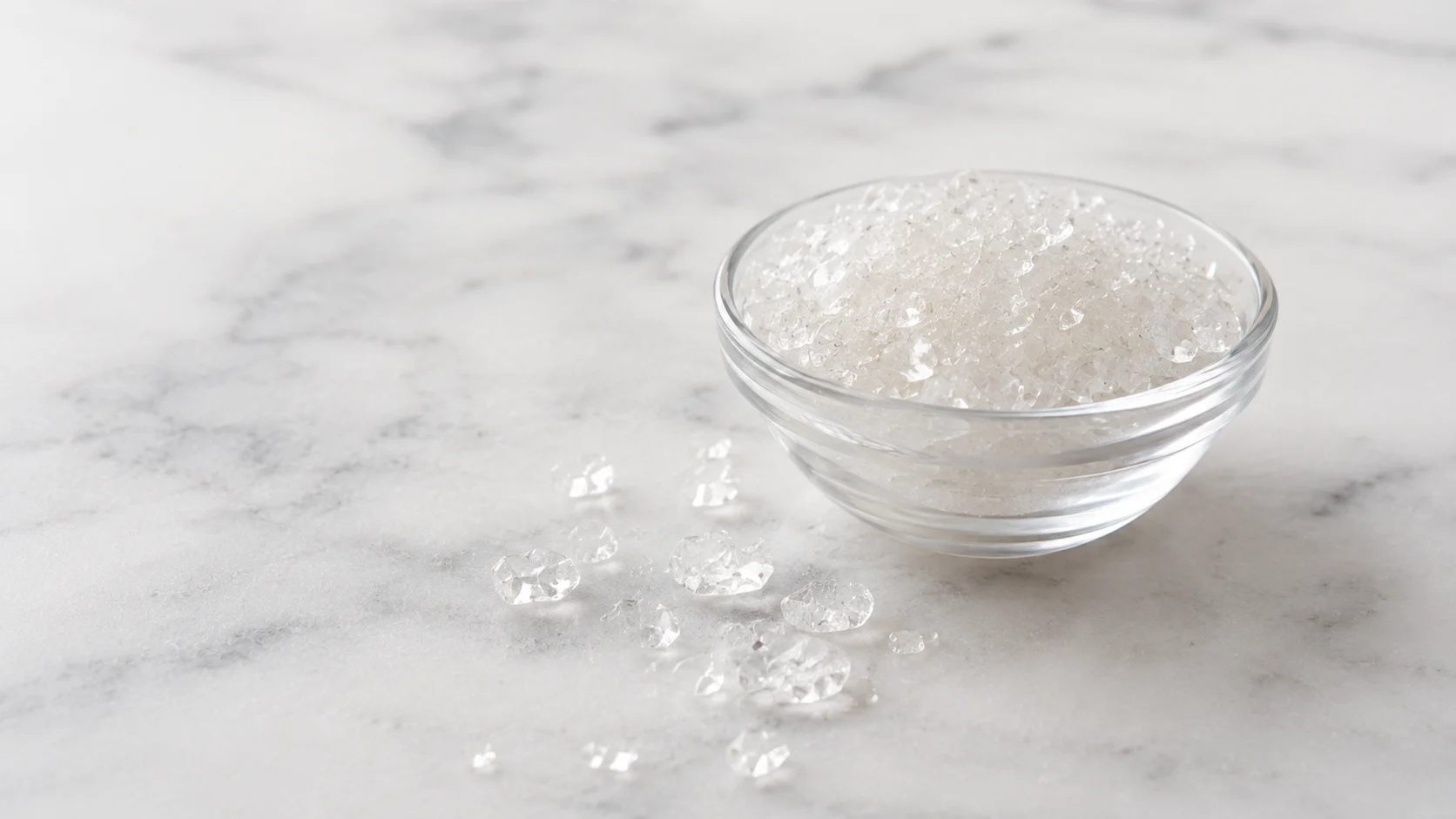
Not exactly. Isomalt comes from sugar, but its structure is modified during manufacturing, so we can’t consider it ordinary sugar. Its appearance is similar—small, white, transparent granules or crystals—but its sweetness, digestion, and behavior when heated are different.
Regarding its natural origin: the starting sucrose comes from sugar beets or sugar cane, but to become isomalt it undergoes an industrial transformation process. The clearest way to define it is this: isomalt is a sugar substitute obtained from sucrose through an industrial process. It doesn’t need to be presented as a completely natural ingredient to highlight its advantages—what’s truly interesting are its properties and the creative possibilities it offers.
What is isomalt used for?
Within confectionery and creative pastry making, it is mainly used to make:
- Handmade lollipops
- Hard candies
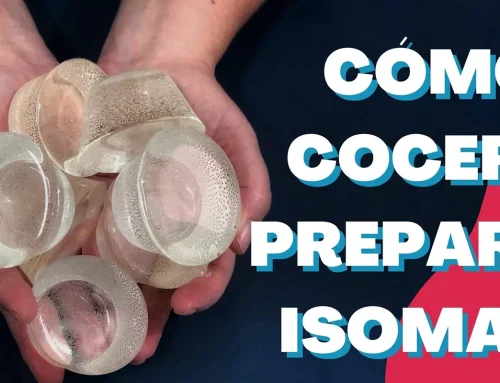
- Transparent spheres and domes
- Edible jewelry
- Windows for cookie houses
- Decorations with a crystal effect and ice effects
- Figures, sculptures and molded or blown pieces
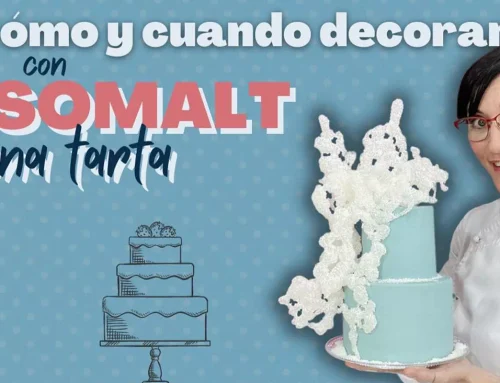
- Cake and dessert decorations
It also allows you to encapsulate decorative elements such as edible flowers, sprinkles, edible prints or small personalized details.
Why is it used so much in creative confectionery?
The main reason is its ability to create transparent pieces.
When properly melted and worked, isomalt can produce a very clean, glossy, and glass-like finish. Furthermore, it is easily colored, allowing for transparent or intense tones without necessarily losing that visual effect.
It also offers good stability during heating and tends to color less quickly than sugar.
This allows for the production of parts:
- Transparent and shiny.
- With very defined shapes.
- With clean colors.
- With great hardness.
- With an elegant and professional finish.
Of course, the result will depend on the technique, the temperature, the added ingredients, and the method of preservation.
Basic differences between isomalt and sugar
| Feature | Isomalt | Common sugar |
| Ingredient type | Polyalcohol or polyol | Saccharose |
| European code | E953 | It is not identified as an additive |
| Sweetness | Approximately half | Reference sweetness |
| Energy | 2.4 kcal per gram | Approximately 4 kcal per gram |
| Confectionery finish | It facilitates the transparent effect | It colors and caramelizes more easily |
| Digestion | It can cause excessive discomfort | It is digested differently |
| Glycemic response | Lower when it replaces sugar | Higher |
These differences do not mean that one is always better than the other: each ingredient has different characteristics and uses.
Frequently asked questions about isomalt
Does isomalt have calories?
Yes. It provides less energy than sugar, but it’s not a calorie-free ingredient. In the European Union, a value of 2.4 kcal per gram is used for polyols, compared to approximately 4 kcal per gram for common sugar.
Does isomalt affect glucose?
It produces a lower glycemic response than sugar when it replaces it in an equivalent food. This does not mean that its effect is always zero, nor that all preparations containing isomalt are automatically suitable for people with diabetes—it is always advisable to review the complete recipe and the individual needs of each person.
Can it cause digestive discomfort?
Yes. As with other sugar alcohols, high consumption can cause gas, bloating, abdominal pain, or a laxative effect. Tolerance varies greatly from person to person and depends on the amount consumed.
Does isomalt resist moisture?
It’s more stable against humidity than many sugar-based preparations, but it’s not immune to it: it can absorb ambient moisture and lose its shine, become dull, sticky, or warp. That’s why proper storage is essential for keeping lollipops and decorations in good condition.
Does isomalt contain gluten?
Pure isomalt contains no wheat, barley, or rye and is gluten-free. However, a lollipop or candy may contain other ingredients (sprinkles, flavorings, chocolates, fillings), so if you have allergies or intolerances, always check all the ingredients used.
Is isomalt the same as isomaltulose?
No. Isomaltulose is a type of sugar used in the production of isomalt. Isomalt is the polyalcohol obtained after transforming and hydrogenating that isomaltulose. It should also not be confused with isomalt, which is a different carbohydrate.
At Isomalt by Mayte Rodríguez, you’ll find isomalt in 1kg or 3kg bags, along with all the materials and tools you need to start creating your own lollipops and decorations. You can also check out our online courses if you want to learn how to work with it step by step in a simple way.
In short: what is isomalt?
Isomalt is a polyol obtained from the transformation of sucrose. It is used as a sugar substitute and is especially valued in creative confectionery because it allows for the production of lollipops, candies, and transparent decorations with a crystal effect.
It’s less sweet than sugar, provides fewer calories per gram, and produces a lower glycemic response when used as a substitute. However, it’s not calorie-free, can cause digestive discomfort if consumed in excess, and needs to be properly protected from moisture. It’s not a miracle ingredient: it’s a very versatile tool that, when worked with the right technique, allows you to transform small, transparent granules into completely unique pieces.


Leave A Comment