

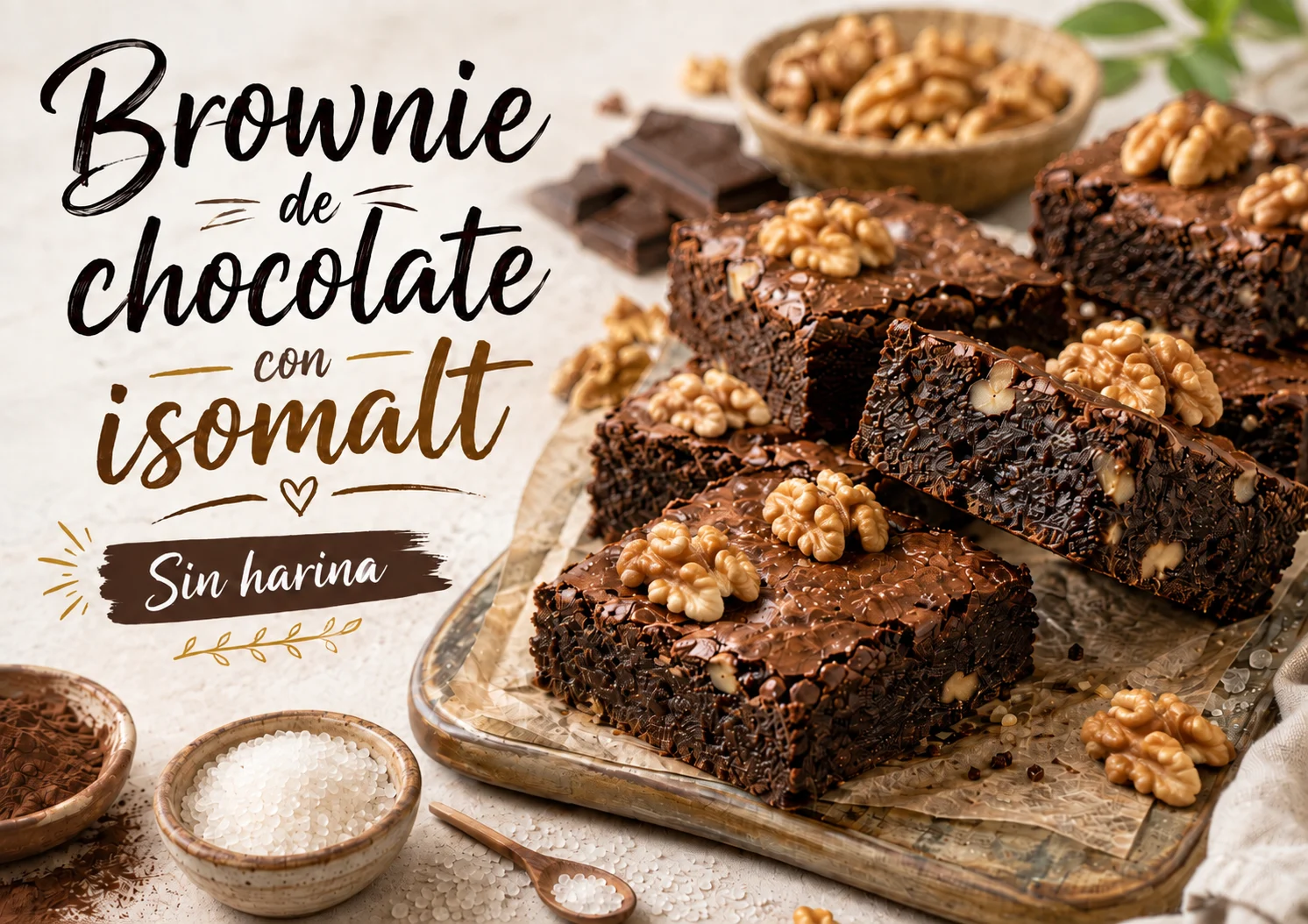
Chocolate. Lots of chocolate. Moist inside. A slightly firm outer layer. And yes: no need to add regular sugar.
Today we’re going to prepare a chocolate brownie with isomalt, a perfect recipe to continue demonstrating that isomalt can do much more than just become lollipops and decorations.
This time we put it straight in the oven.
And there’s a small challenge: in a brownie, sugar isn’t just for sweetening. It also influences the texture, moisture, and final structure. That’s why it’s not simply a matter of removing the sugar and waiting for magic to happen.
We will use isomalt as a volume substitute and carefully control the temperature, baking, and cooking point.
The result: an intense, compact and moist brownie inside, with optional nuts and lots of chocolate flavor.
- 🥄 Servings: 9 portions
- 📐 Recommended mold: 20 × 20 cm
- ⏱️ Preparation time: 20 minutes
- 🔥 Baking time: 20–24 minutes
- ❄️ Resting time: 45–60 minutes
- ⏳ Approximate total time: 1 hour and 40 minutes
- ⭐ Difficulty: easy
- 🌡️ Oven temperature: 190 ºC
- 🚫 Added sugars: no, provided that all the ingredients used also do not contain them
Ingredients
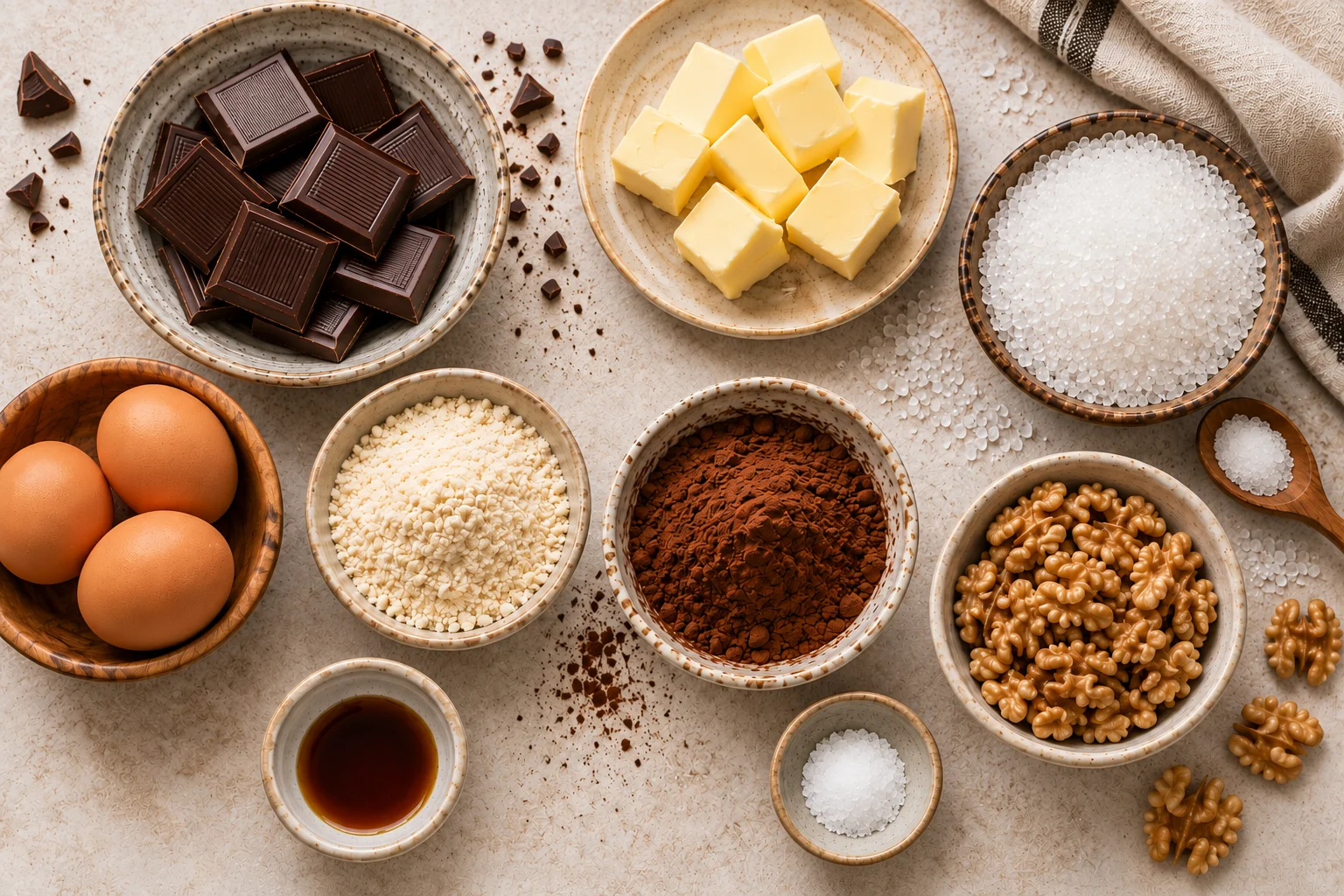
All the isomalt ingredients for this recipe can be found in our ingredients section.
- 180g of dark chocolate with no added sugar
- 120g of butter
- 120 g of isomalt
- 35 g of water
- 3 eggs
- 70g of almond flour
- 25g of pure unsweetened cocoa
- 1 teaspoon of vanilla extract
- 1 pinch of salt
- 70g of walnuts, optional
If you like it quite sweet
You can add a small amount of a high-intensity baking sweetener, following the manufacturer’s instructions. Why? Isomalt is less sweet than sugar. Significantly increasing the amount simply to achieve more sweetness would unnecessarily alter the brownie recipe.
How to make chocolate brownie with isomalt step by step
1. Prepare the mold and melt the chocolate
Preheat the oven to 190°C (375°F), using the conventional setting (top and bottom heat). Line a 20 x 20 cm (8 x 8 inch) square baking tin with parchment paper, allowing it to overhang slightly on the sides to make removing the brownie easier.
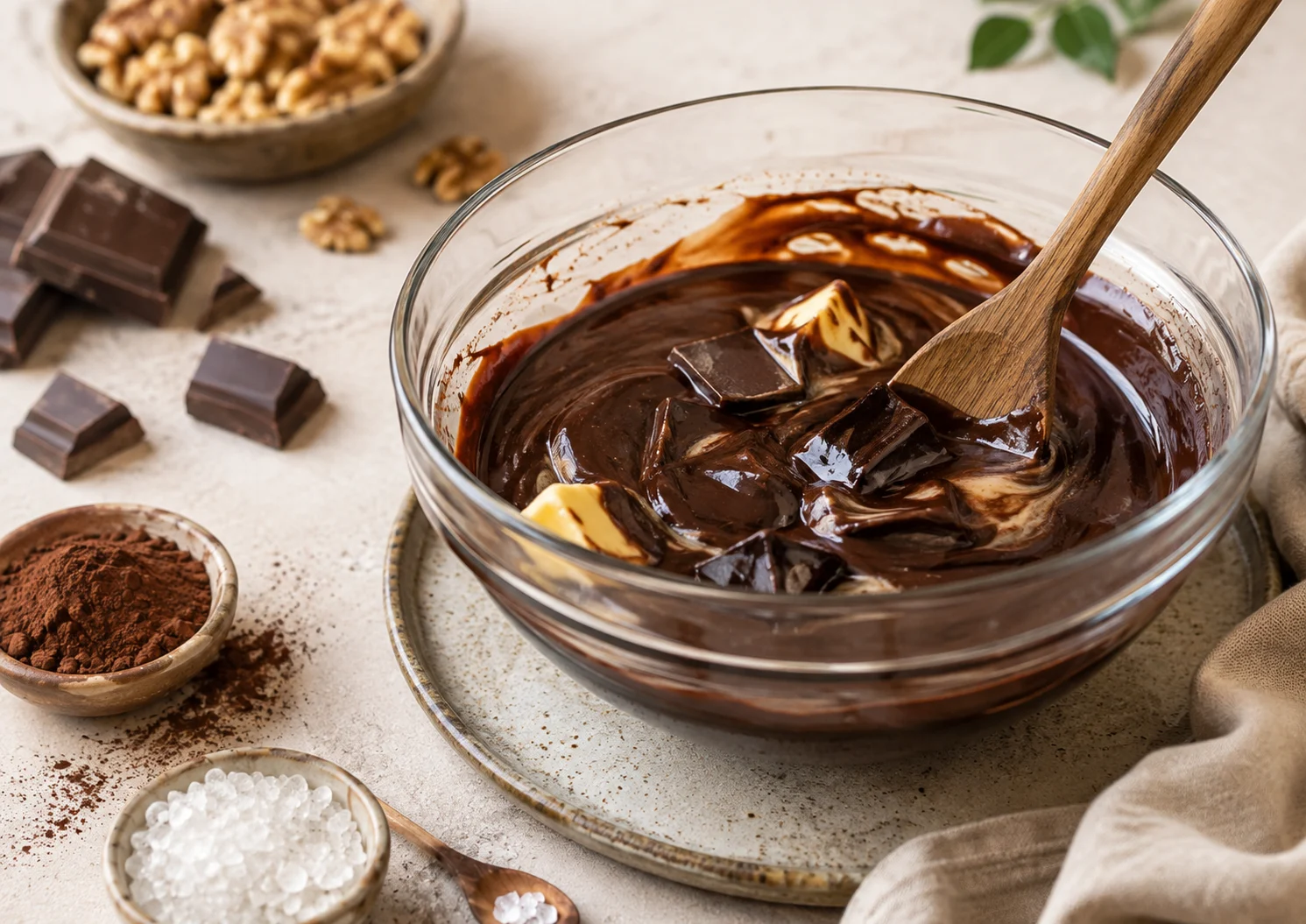
Chop the chocolate and place it in a bowl along with the butter. You can melt them in a double boiler or in the microwave in short intervals of 20–30 seconds, stirring between each interval until you get a completely smooth and shiny mixture. Set aside.
2. We prepare the isomalt and mix it with the chocolate
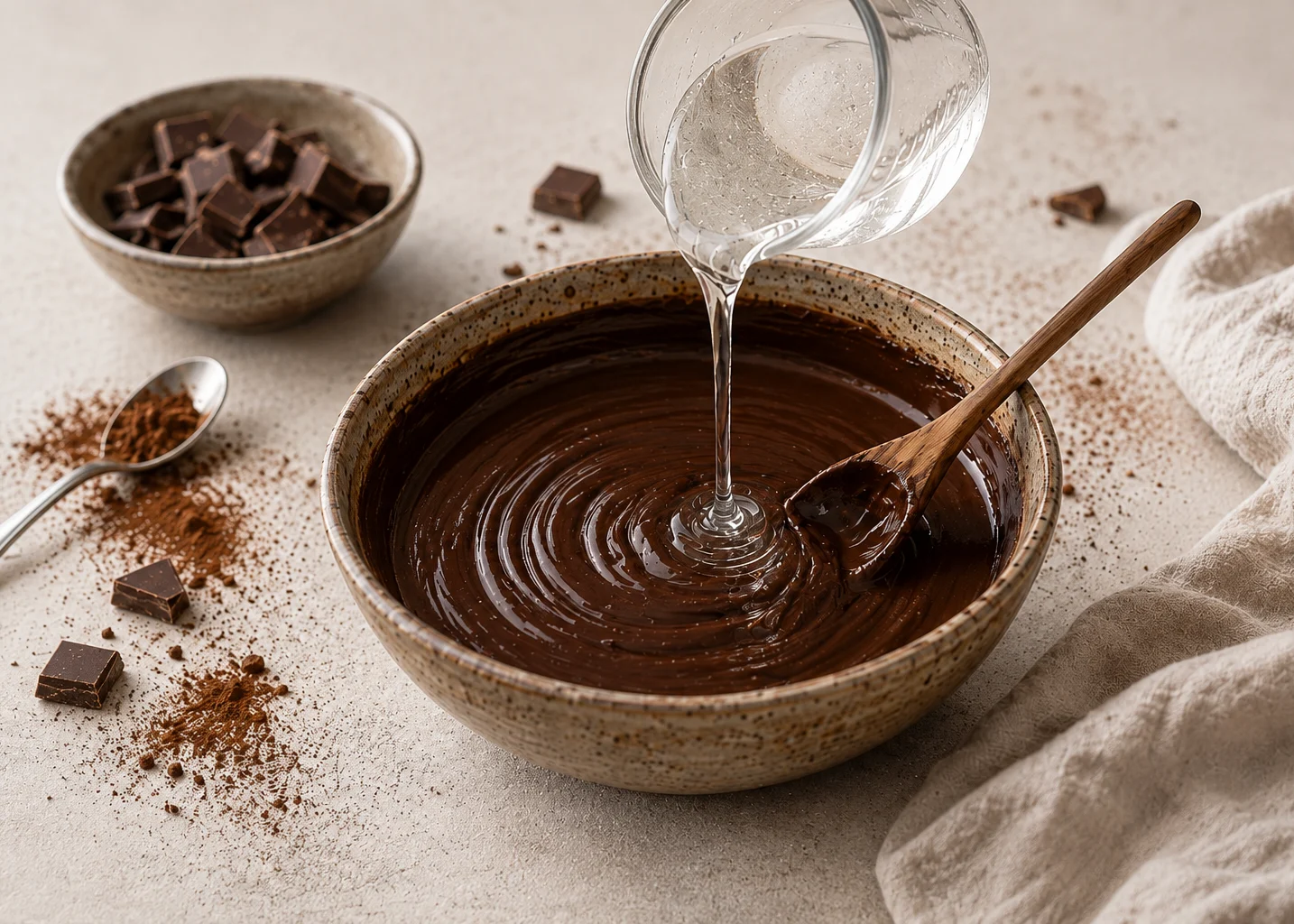
Place 120g of isomalt and 35g of water in a saucepan. Heat over medium heat until the isomalt has dissolved and you have a clear syrup. We don’t need to heat it to the temperatures used for making lollipops; we only want to dissolve it so that it distributes evenly throughout the dough. Remove from the heat.
Gradually add the hot isomalt syrup to the chocolate and butter mixture while stirring until smooth. Let it cool for a few minutes: we don’t want to add the eggs when the mixture is too hot, or we’ll start cooking them prematurely.
3. Add the eggs
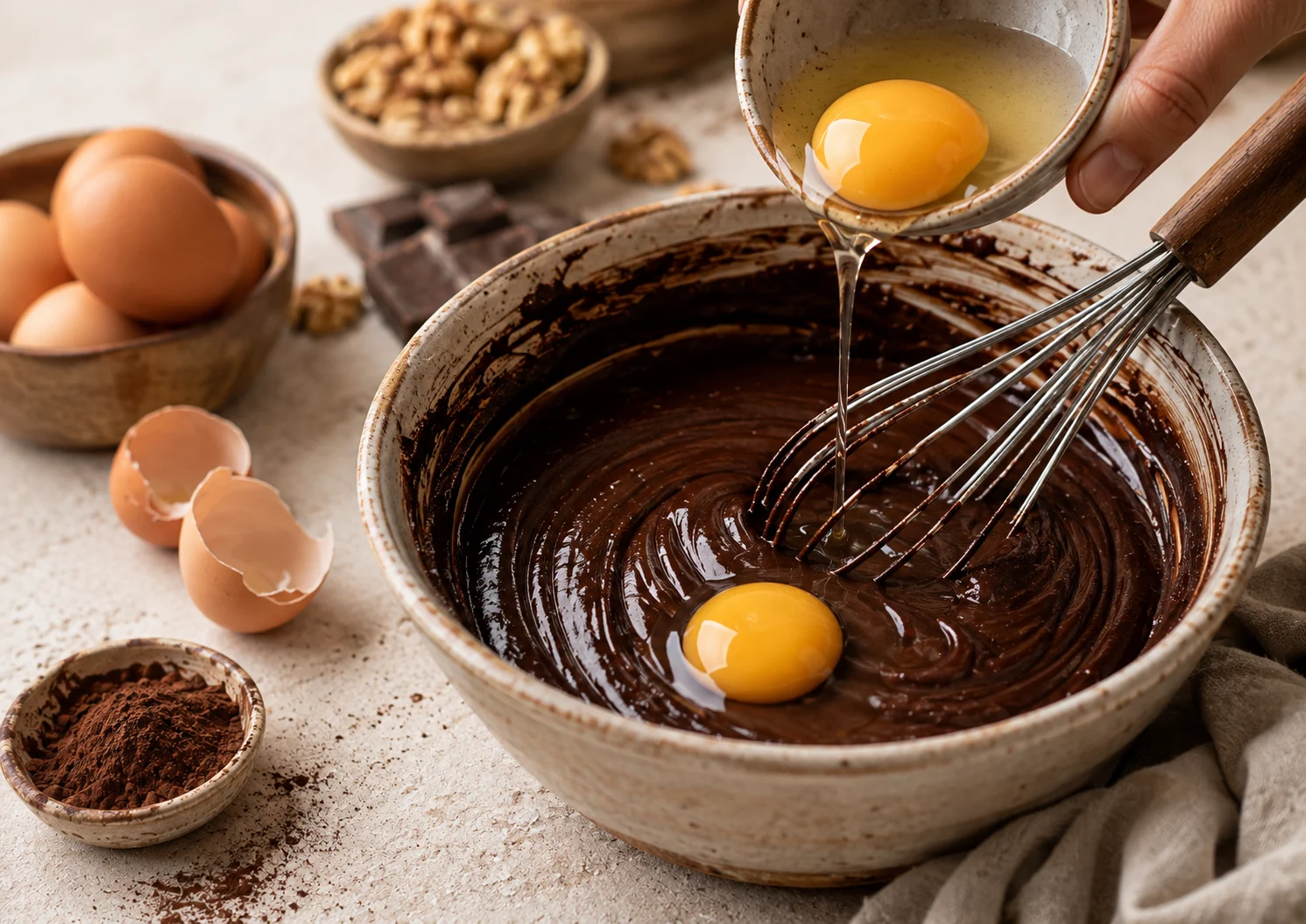
Incorporate the eggs one at a time, mixing well after each one before adding the next. Add the vanilla extract as well.
There’s no need to beat it excessively. In a brownie, we’re aiming for a compact and moist texture, not incorporating large amounts of air as we would in some cakes.
4. Add the dry ingredients
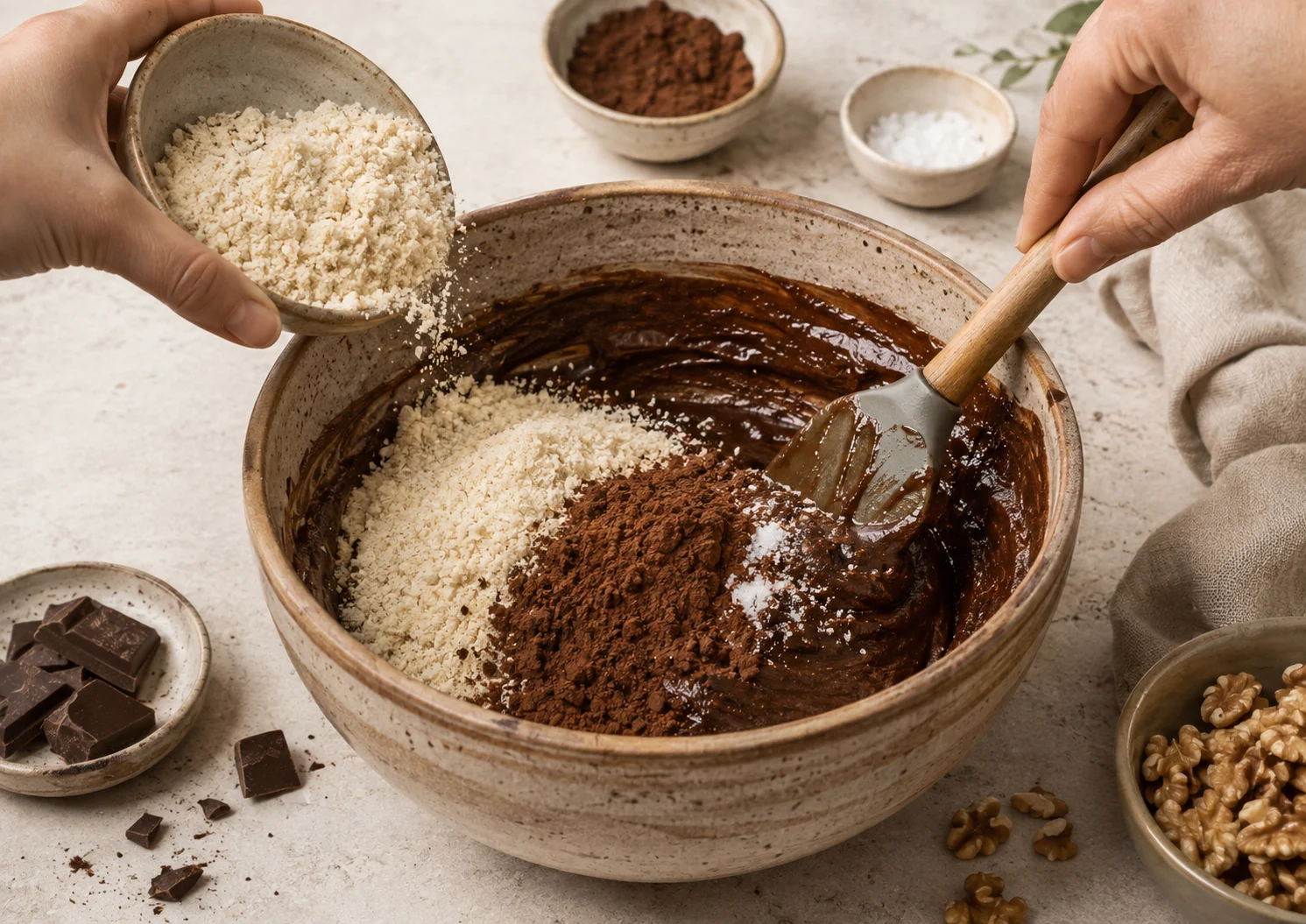
Sift the almond flour, cocoa powder, and a pinch of salt over the mixture. Mix only until the flour is incorporated. Do not overwork the dough.
If you’re on team walnut brownies, add the 70g of roughly chopped walnuts now, reserving some to sprinkle on top. If you’re on team no walnuts, simply skip this step. You can also substitute hazelnuts or pistachios.
5. Into the oven, now wait
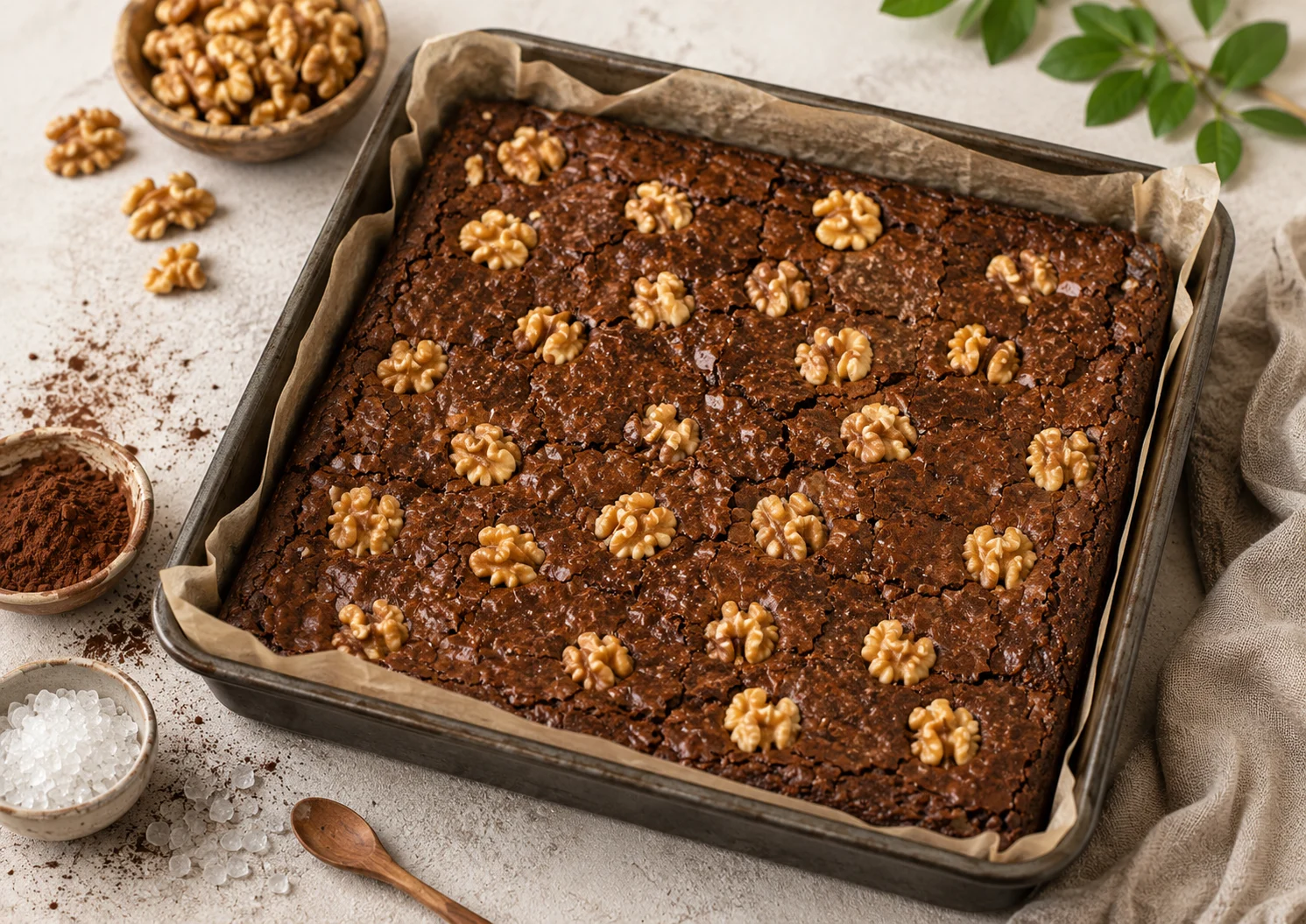
Pour the batter into the tin, smooth the surface slightly, and scatter the reserved walnuts on top. Bake at 190°C for approximately 20–24 minutes.
Don’t wait for the toothpick to come out completely clean. If it does, we’ve probably overbaked the brownie. When you insert a toothpick into the center, it should come out with a few moist crumbs clinging to it, but not covered in runny batter. That’s the point.
Remove the brownie from the oven and let it cool in the pan for 15–20 minutes. Then, you can remove it using the parchment paper and let it finish cooling on a wire rack. Although it may be tempting to cut it immediately, let it rest for at least 45–60 minutes before cutting: as it cools, the inside will finish setting and achieve that dense, moist texture we’re looking for.
What texture are we looking for?
This brownie isn’t meant to be a chocolate cake. We want: a dense, moist but not raw interior; plenty of cocoa flavor; a rich crumb; and crunchy little pieces of walnut if you choose to add them. If, when you cut into it after it’s cooled, you find an almost creamy texture in the center, we’re on the right track.
Isomalt in a brownie: what changes compared to sugar?
This is probably the most interesting part of the recipe. In baking, sugar isn’t just for making something sweet. It also plays a role in factors like texture, moisture, volume, color, and structure. That’s why substituting it requires thinking about the entire recipe.
In our brownie, we use isomalt to add volume and sweetness, even though its sweetening power is less than that of sugar. That’s why we’ve paired the isomalt with incredibly flavorful ingredients like dark chocolate, pure cocoa, vanilla, and walnuts. The result is deliberately less sweet than many commercial brownies. And that’s precisely where part of its charm lies: the chocolate is the star.
Why do we dissolve the isomalt first? We could add it directly in granular form, but there’s a greater risk of undissolved crystals and a slightly grainy texture. Preparing a small syrup with water beforehand allows for better distribution throughout the dough, and you don’t need to worry about the 35g of water: that amount is included in the formula to maintain a moist texture.
Do you want a sweeter brownie?
The most important advice is this: don’t add significantly more isomalt simply to increase sweetness. You’d also be altering the proportion of solids in the recipe. If, after tasting it, you want a sweeter flavor, it’s easier to maintain the amount of isomalt and add a small amount of another high-intensity sweetener, always following the manufacturer’s recommendations.
Another variation that works particularly well is adding 1 teaspoon of instant coffee to the dry ingredients. We’re not aiming for the brownie to taste like coffee; a small amount helps enhance the cocoa flavor and makes the chocolate taste even more intense.
If you’re one of those who believe there’s never too much chocolate, you can add about 40–50g of chopped (unmelted) sugar-free chocolate to the batter, along with the walnuts. When you cut the brownie, you’ll find small flecks of melted chocolate inside.
Possible substitutions
- Almond flour → ground almonds: practically the same.
- Walnuts → hazelnuts: more toasted flavor.
- Walnuts → pistachios: a different and very special version.
- Butter → lactose-free butter: very similar result.
- Dark chocolate → other chocolate without added sugars: always check its composition.
- Vanilla → instant coffee: greatly enhances the flavor of chocolate.
- Vanilla → cinnamon: changes the aromatic profile.
- Pure cocoa → defatted cocoa without sugar: the texture may be slightly drier.
Approximate nutritional information
The following values were calculated using unsweetened dark chocolate, butter, 120g isomalt, 3 eggs, almond flour, pure cocoa powder, and 70g walnuts. These values are approximate and may vary considerably depending on the brands used, especially the chocolate.
For one serving, if we divide the brownie into 9 squares:
- Energy value: 348 kcal / 1,457 kJ
- Fats: 29.7 g
- of which saturated: 13.2 g
- Carbohydrates: 24.8 g
- of which sugars: 1.1 g
- Polyols from isomalt: approx. 13.3g
- Fiber: 5.4 g
- Protein: 7.2 g
Important: A recipe without added sugars does not mean a calorie-free recipe. We have chocolate, butter, almonds, and walnuts, which contribute a significant amount of energy. Our goal here is not to create a “light” brownie, but to explore a different way of making it without adding conventional sugar and using isomalt.
Conservation
Once completely cooled, store the brownie in a tightly sealed container.
At room temperature
You can keep it for approximately 2 days in a cool, dry place.
In refrigerator
It will keep for approximately 4–5 days. Refrigerating it will make it considerably firmer. Take it out about 15–20 minutes before eating if you want it to have a softer texture.
Can it be frozen?
Yes. In fact, the brownie freezes quite well. First, cut it into portions, wrap each square individually, and place them in an airtight container. To eat, let it thaw slowly at room temperature or in the refrigerator.
Frequently Asked Questions
Can I directly substitute isomalt for sugar in any brownie recipe? I don’t recommend doing so automatically. Although you can use similar amounts by weight in certain recipes, sugar and isomalt don’t behave exactly the same way or have the same sweetening power. It’s best to adjust the entire recipe.
Will the brownie be as sweet as a traditional one? No. This recipe is deliberately more moderately sweet. Isomalt is less sweet than sucrose, and we want the chocolate flavor to really shine. If you want to increase the sweetness, you can use a small amount of another baking-safe sweetener.
Can I add the isomalt directly to the batter? You can find recipes that use it directly, especially when it’s very finely ground. However, for this recipe, I prefer to dissolve it in water first. This prevents finding small crystals in the finished brownie.
Why do we use almond flour? Almond flour adds fat, moisture, and a particularly pleasant texture to this type of brownie. It also pairs perfectly with chocolate.
Can I use wheat flour? Yes, but I don’t recommend automatically substituting it gram for gram without making adjustments. Wheat flour absorbs and structures the dough differently. This recipe is specifically formulated with almond flour.
How do I know when it’s done? First, check the edges: they should look firm. The center may seem slightly softer. Then, insert a toothpick: it should come out with moist crumbs, not completely clean. Remember that the brownie continues to set as it cools.
Why did my brownie turn out dry? The most common cause is overbaking. Five extra minutes can make a huge difference. Every oven is different, so start checking it after about 20 minutes.
Can I make the brownie the day before? Yes. In fact, after a few hours of resting, the inside becomes even more compact and the flavors meld together much better.
Can I eat the brownie warm? Of course, you can. But if you really want to appreciate the texture we’ve been aiming for, I recommend letting it cool. If you want to serve it warm, wait until it’s completely cooled first, then heat your portion for a few seconds.
Another way to discover isomalt
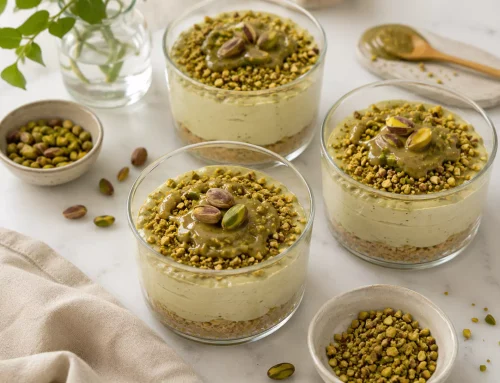
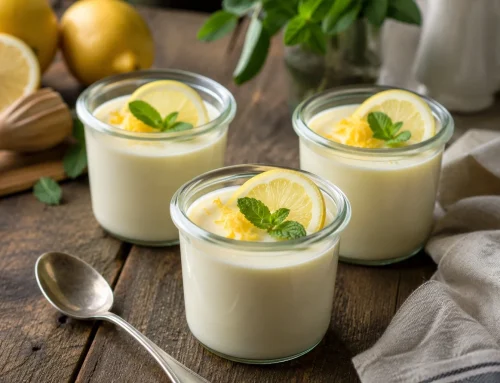
Lollipops, decorations, panna cotta, cheesecake… and now brownies too. Each recipe helps us understand something new, because working with isomalt isn’t just about replacing sugar with isomalt. It’s about understanding the role sugar played in that recipe and learning how to reformulate it to achieve the desired result. And that’s precisely why we love to experiment.
This time we’ve achieved a rich, moist chocolate brownie with no added sugar, where the isomalt is an integral part of the batter. The bagged isomalt we use in this recipe is the same we use in all our sugar-free sweets, and in our kitchenware section you’ll find molds and accessories to make your own version at home.
If you try this recipe, let us know what you think and, above all, what isomalt recipe you’d like us to make next. Because we still have many things to experiment with.




Leave A Comment