

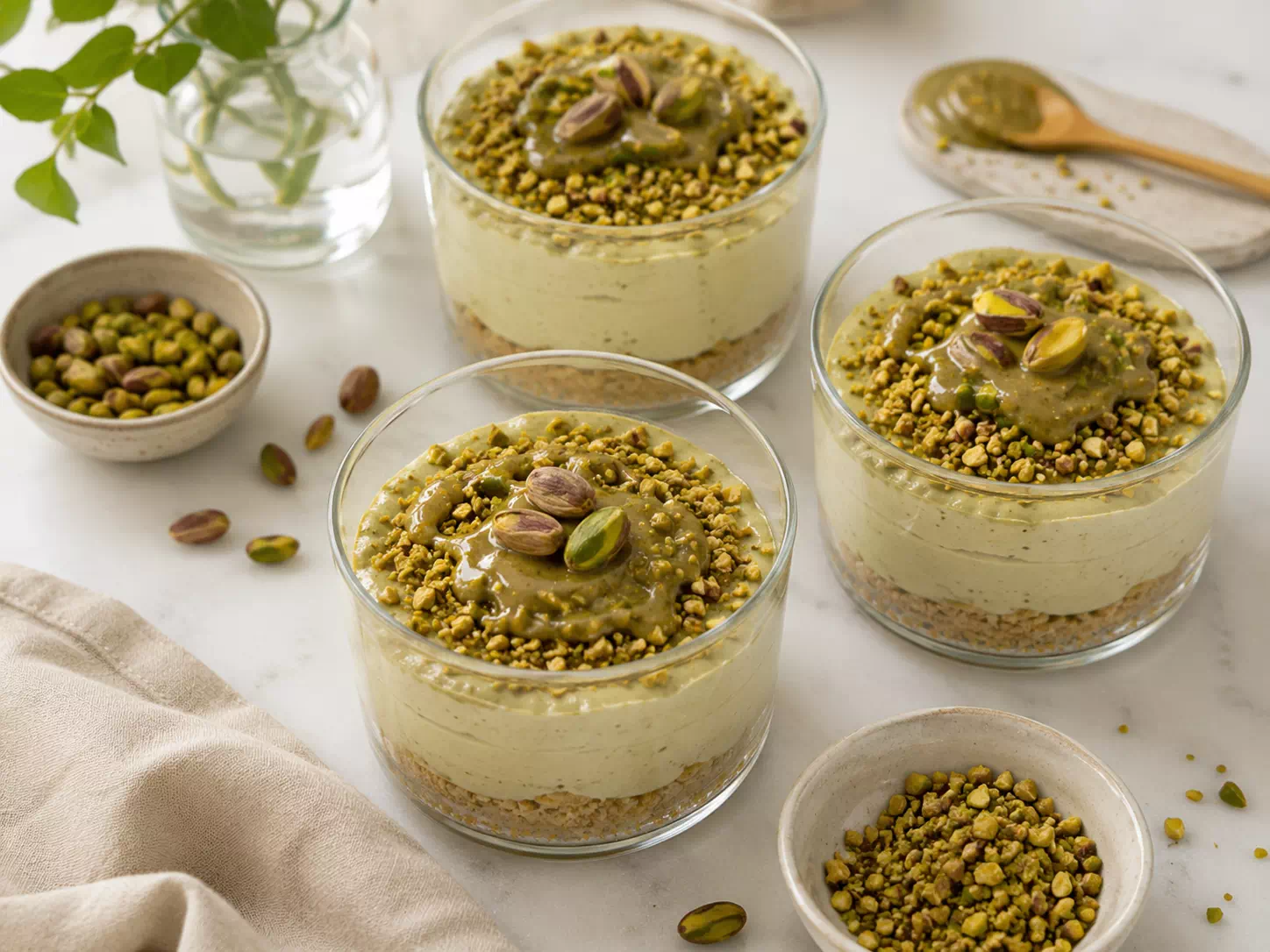
Who said isomalt was only good for making lollipops and decorations?
Today we’re going to take it to a completely different level with a creamy, crunchy dessert with a strong pistachio flavor: a sugar-free cheesecake in a glass with isomalt.
Besides being delicious, this recipe helps us discover another possibility of isomalt in baking: using it to add sweetness and volume to preparations where we would normally use sugar.
However, there’s something we need to keep in mind from the start: isomalt is less sweet than sugar. That’s why we’re not aiming for this cheesecake to be extremely sweet. We want the pistachio to be the star.
Ready? Let’s go for it.
- 🥄 Servings: 6 generous glasses or 8 small ones
- ⏱️ Preparation time: 25 minutes
- 🔥 Baking time: 10-12 minutes
- ❄️ Cooling time: minimum 4 hours
- ⏳ Total time: approximately 4 hours and 40 minutes
- ⭐ Difficulty: easy
Utensils and ingredients
Necessary utensils
- Oven
- Baking tray lined with parchment paper
- Large bowl
- Saucepan
- Manual rods
- Silicone spatula
- Kitchen scale
- Piping bag (optional)
- 6-8 individual cups
All the isomalt ingredients for this recipe can be found in our ingredients section.
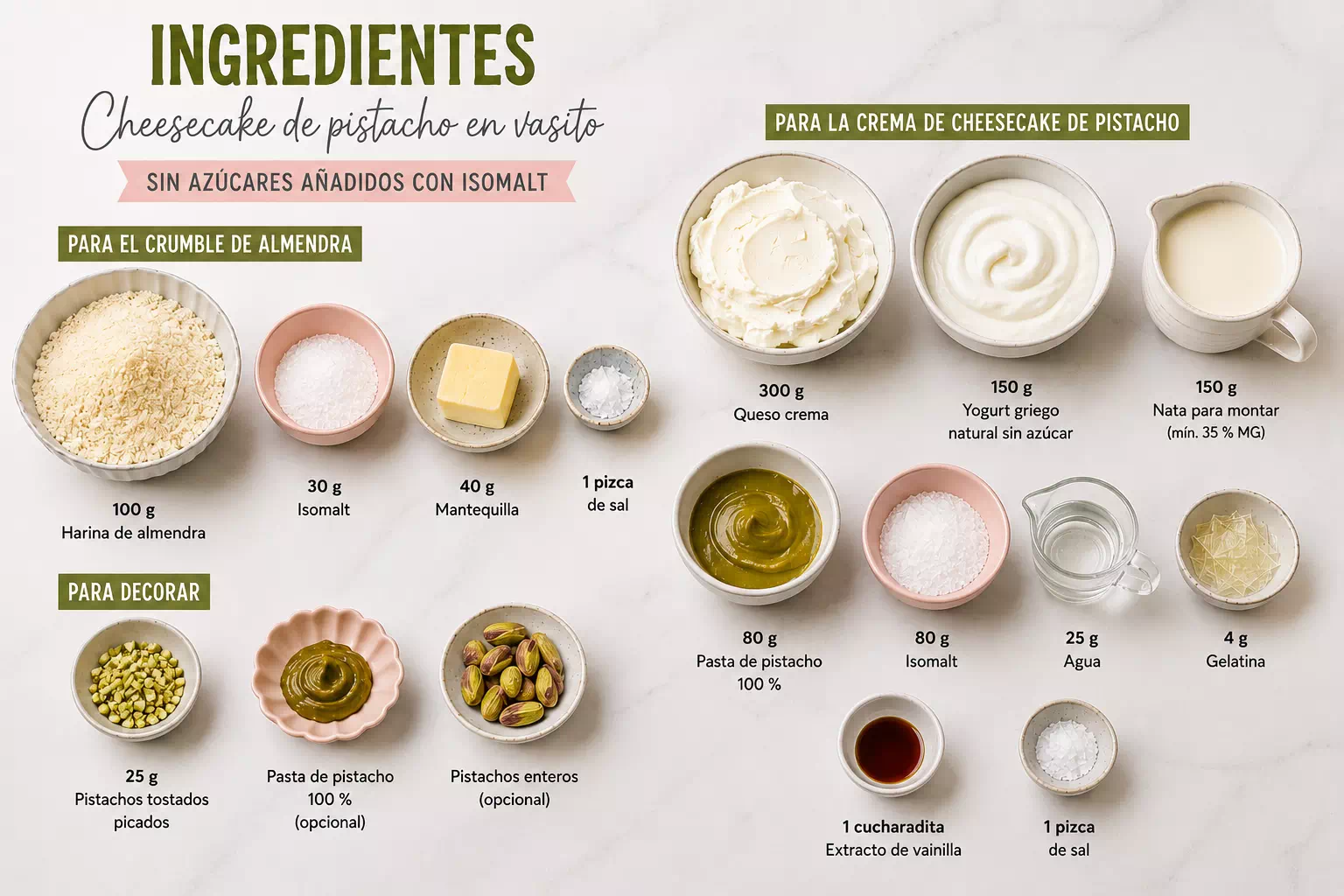
For the almond crumble
- 100g of almond flour
- 40g of butter
- 30 g of isomalt
- 1 pinch of salt
For the pistachio cheesecake cream
- 300g of cream cheese
- 150g of unsweetened natural Greek yogurt
- 150 g whipping cream (min. 35% MG)
- 80g of 100% pistachio paste
- 80 g of isomalt
- 25 g of water
- 4 g of gelatin
- 1 teaspoon of vanilla extract
- 1 pinch of salt
For decoration
- 25g of roasted and chopped pistachios
- A little 100% pistachio paste, optional
- Whole pistachios, optional
And if you want to add a little color contrast, you can add a fresh raspberry just before serving.
How to make pistachio cheesecake with isomalt step by step
1. We start with the crumble
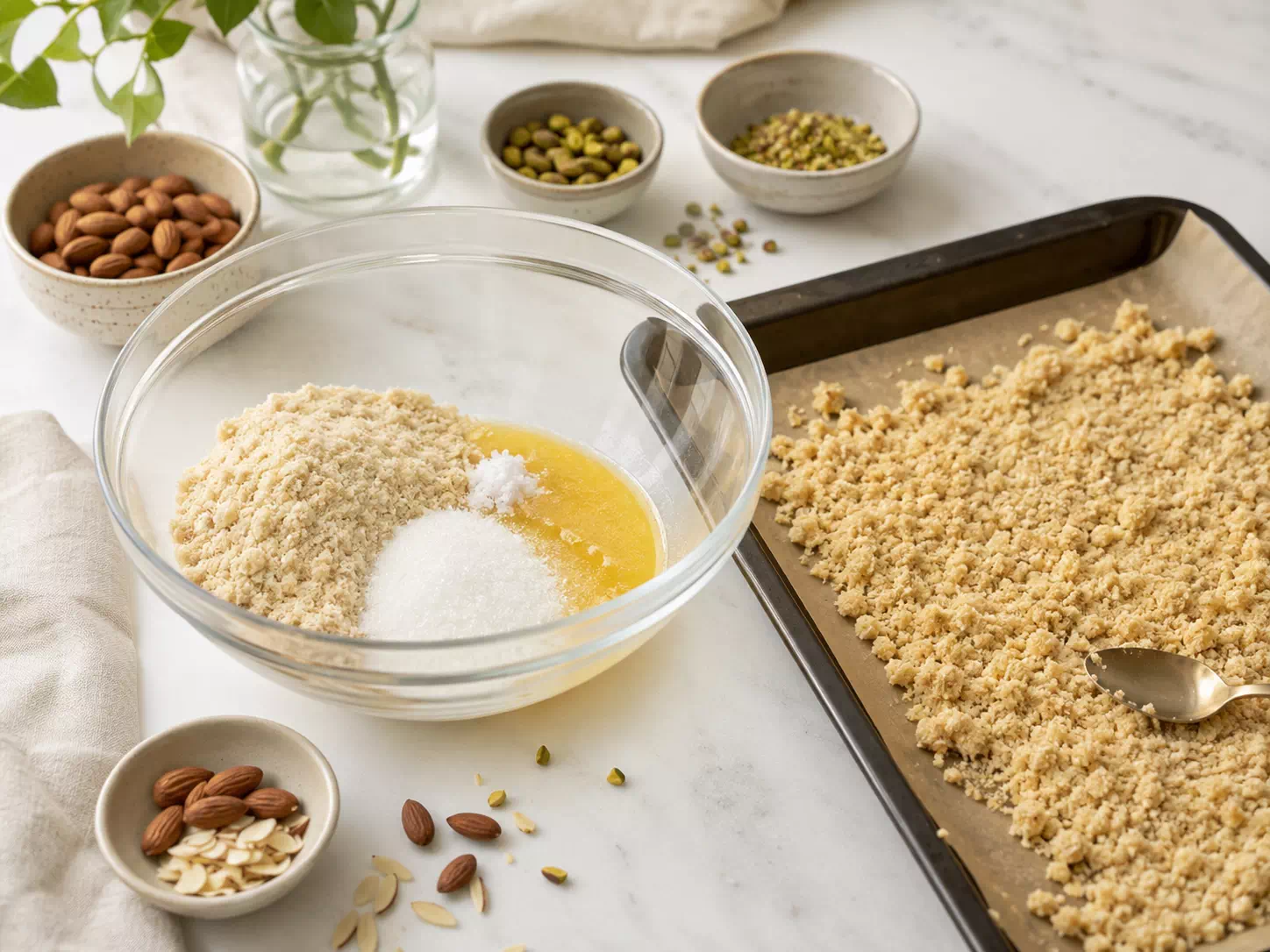
Preheat the oven to 170°C (340°F). In a bowl, mix the almond flour, isomalt, and a pinch of salt. Add the melted butter and mix until the mixture resembles damp sand.
We don’t want to form a compact mass. We’re looking for small, irregular pieces that will give us that delicious crunch. Spread the mixture onto a baking sheet lined with parchment paper.
Bake for about 10-12 minutes, stirring lightly halfway through to ensure even browning. Remove and let cool completely.
Important: Do not assemble the cups with the crumble still hot because we will lose some of its crunchy texture.
2. We prepare the isomalt syrup
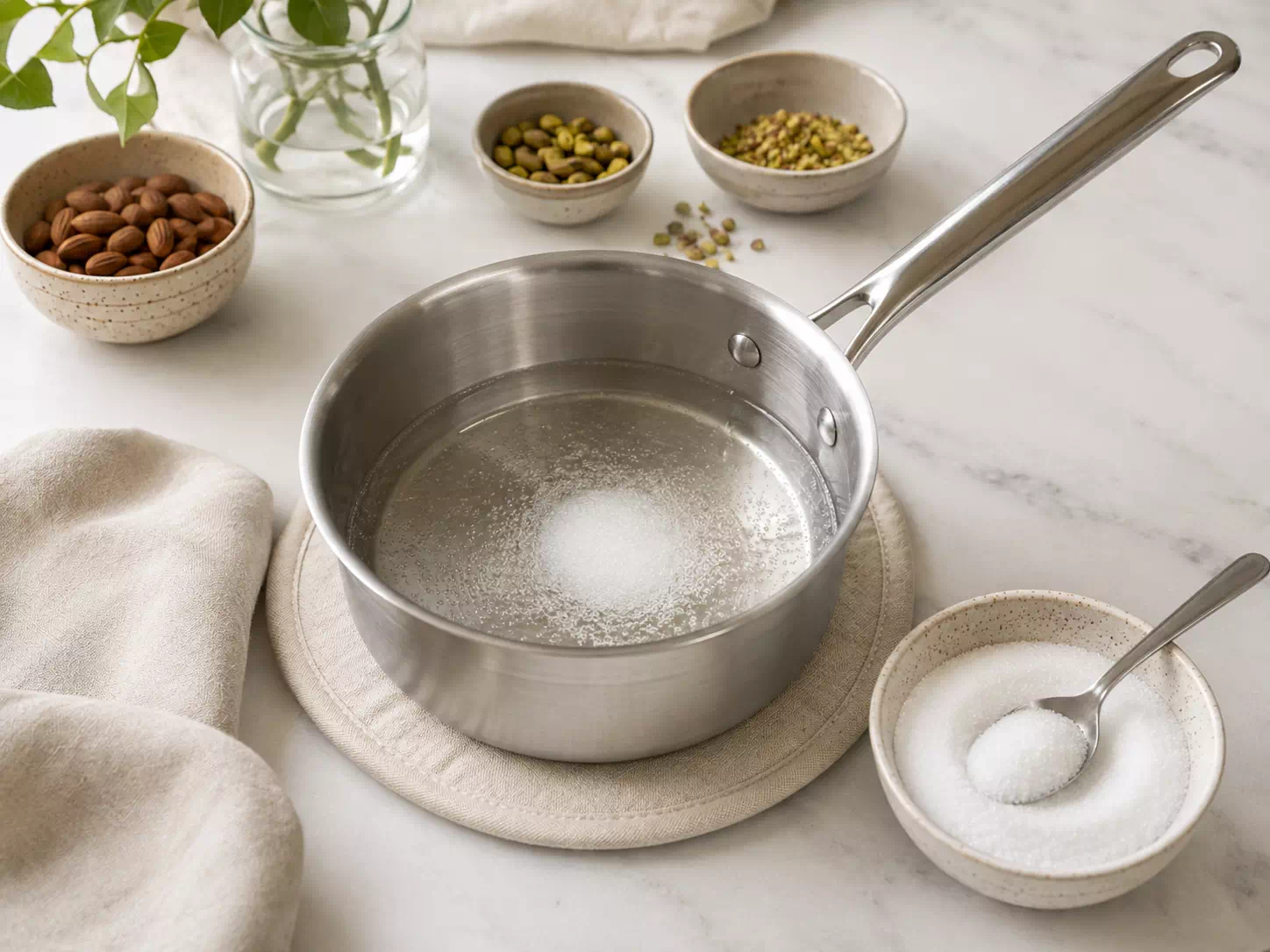
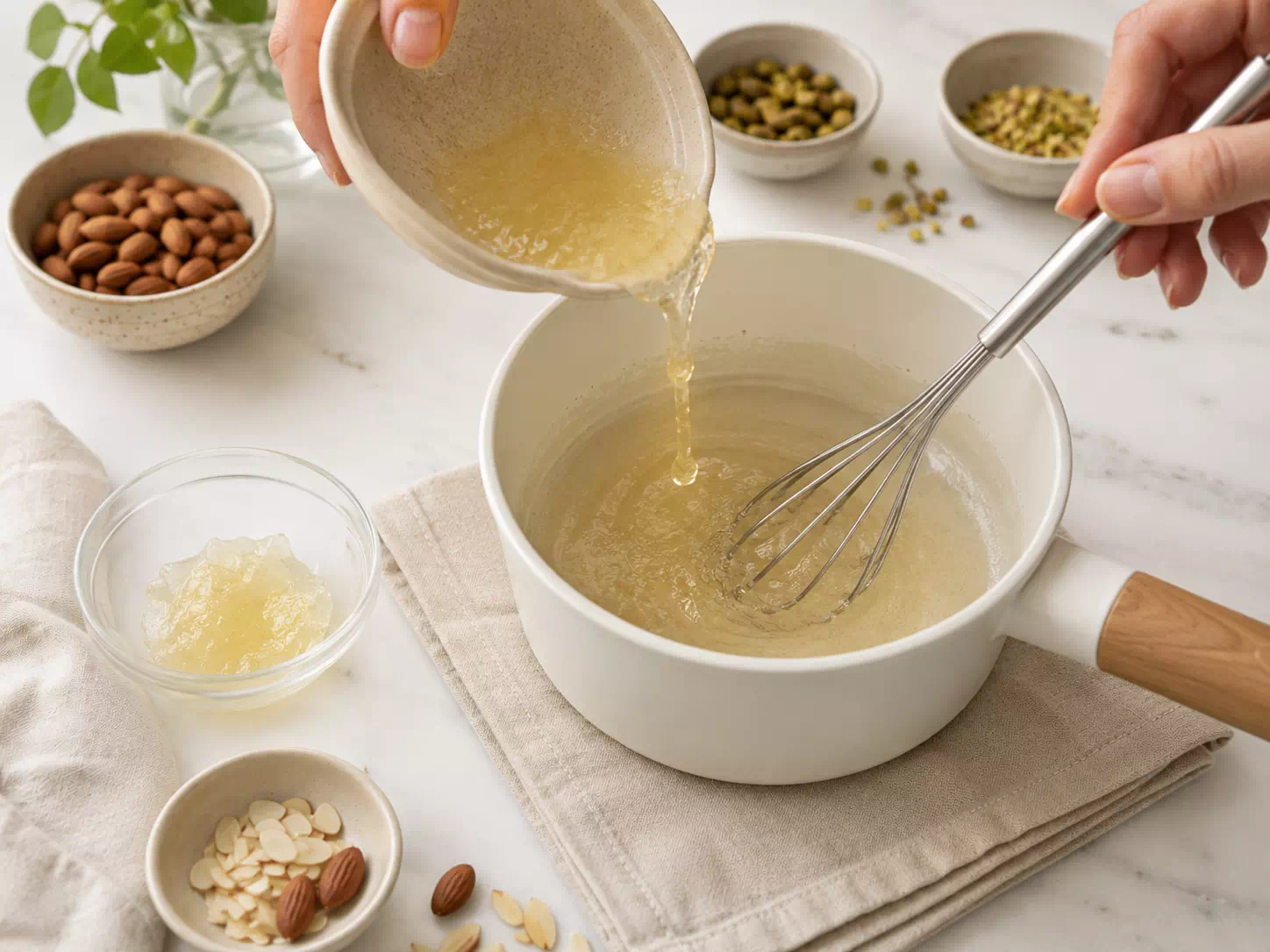
Put 80g of isomalt and 25g of water in a saucepan. Heat over medium-low heat until the isomalt has completely dissolved.
In this recipe, we don’t need to heat the isomalt to caramel temperature. We simply want to dissolve it so it can be easily incorporated into our cream. Once it’s clear and completely dissolved, remove it from the heat.
3. Add the gelatin
While you prepare the isomalt, hydrate the gelatin following the manufacturer’s instructions.
Once the gelatin is hydrated and the isomalt syrup is still warm, but not boiling, stir it in. Stir until completely dissolved. Let the mixture cool for a few minutes. It shouldn’t be too hot when you add it to the cream cheese.
4. We prepare the pistachio cream
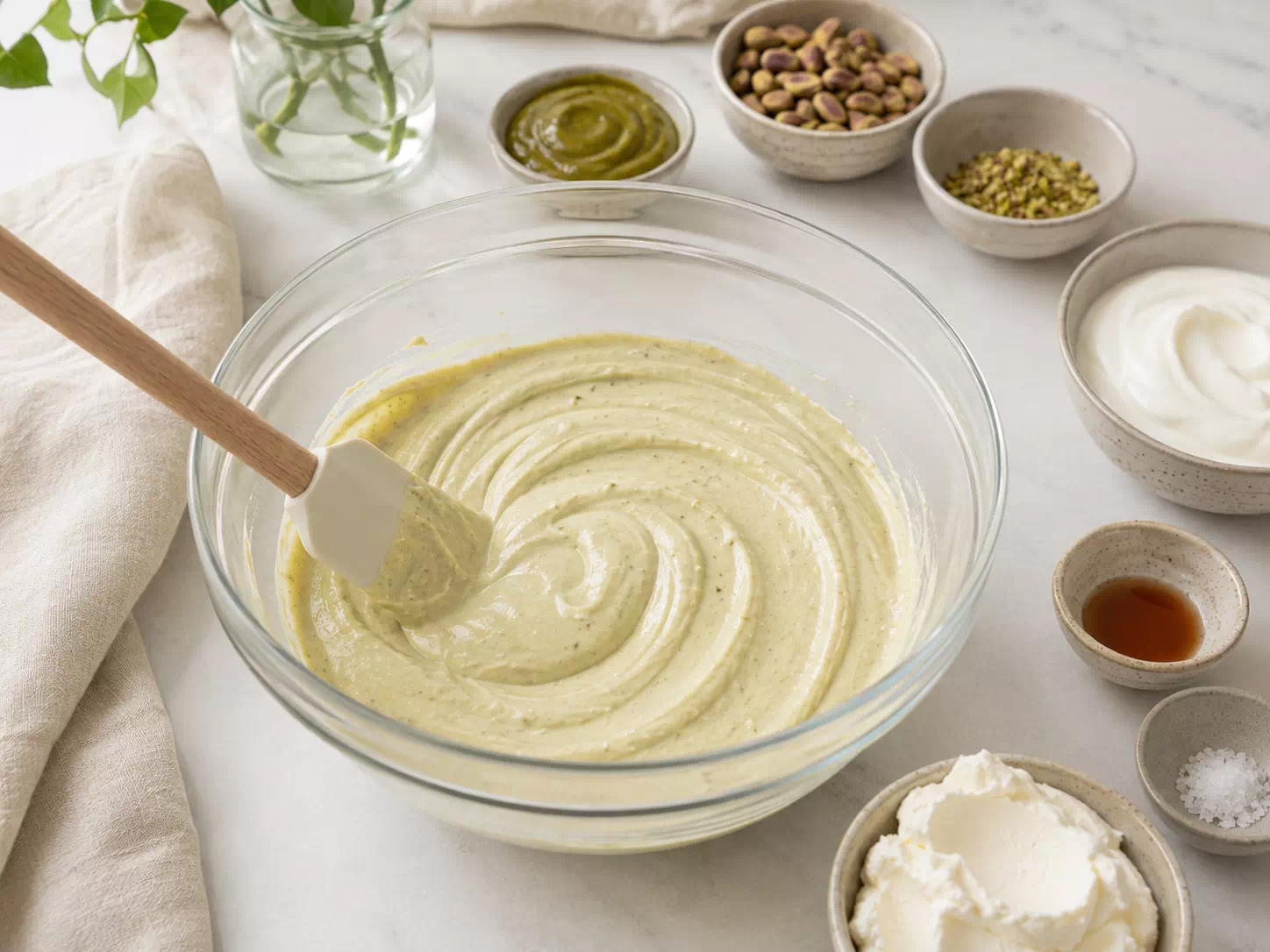
In a large bowl, mix the cream cheese, Greek yogurt, pistachio paste, vanilla, and a pinch of salt. Mix until you have a smooth cream.
Now gradually incorporate the lukewarm isomalt syrup and gelatin, stirring constantly. We want to achieve a smooth cream, without lumps, and with that beautiful natural green hue that the pistachio provides.
5. We whip the cream
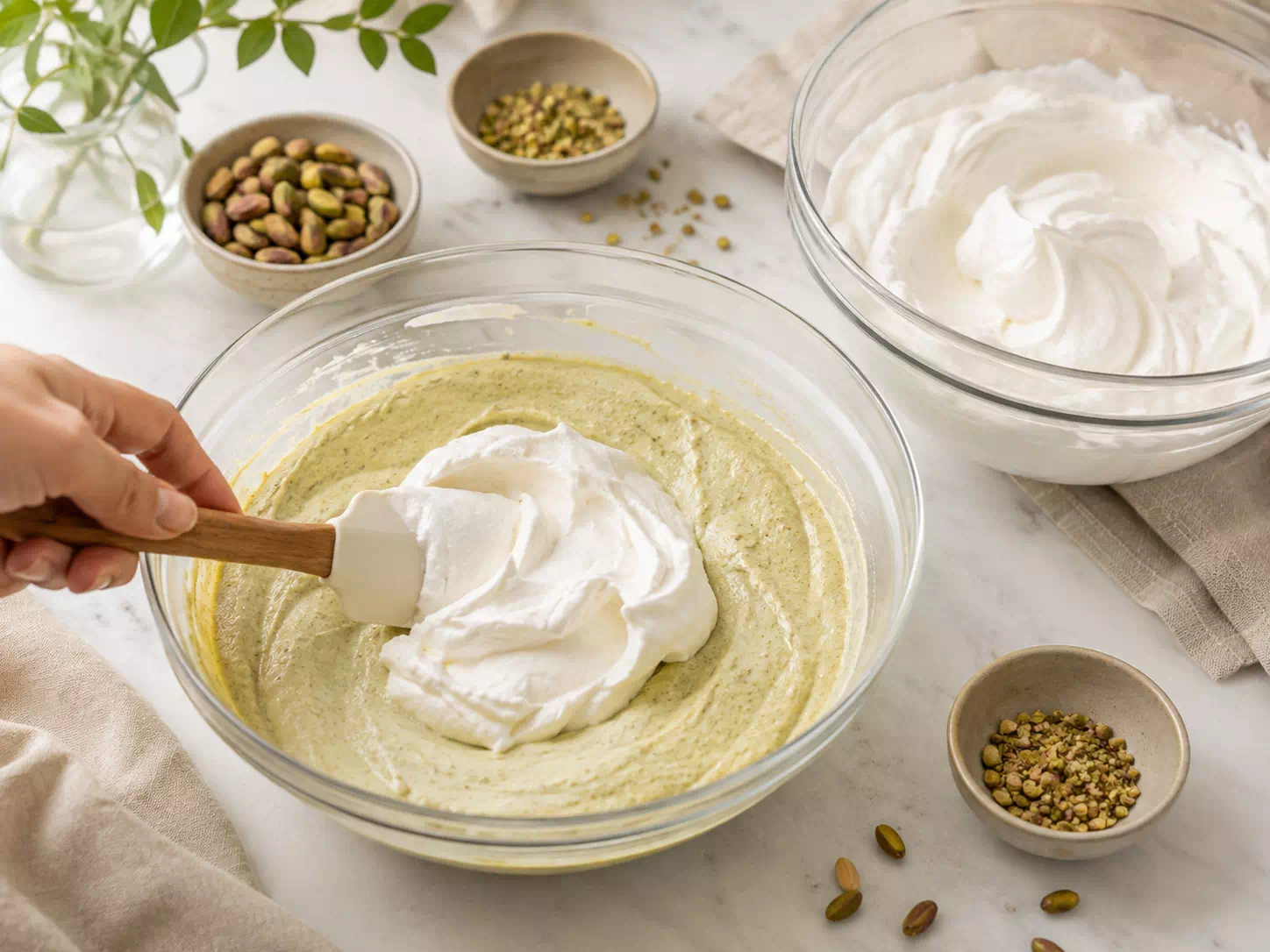
The cream must be very cold. Whip it until you get a creamy and firm texture, but don’t overdo it. We don’t need extremely stiff cream.
Gradually fold it into the pistachio cream using gentle, circular motions. This step will give our cheesecake a much lighter and airier texture.
And now for an important moment: taste the cream. Isomalt has a lower sweetening power than sugar, so this cheesecake will have a more moderate sweetness than a conventional one. If you prefer sweeter desserts, you can add a small amount of a high-intensity sweetener suitable for baking, always following the dosage indicated by the manufacturer.
Assembling the small cups
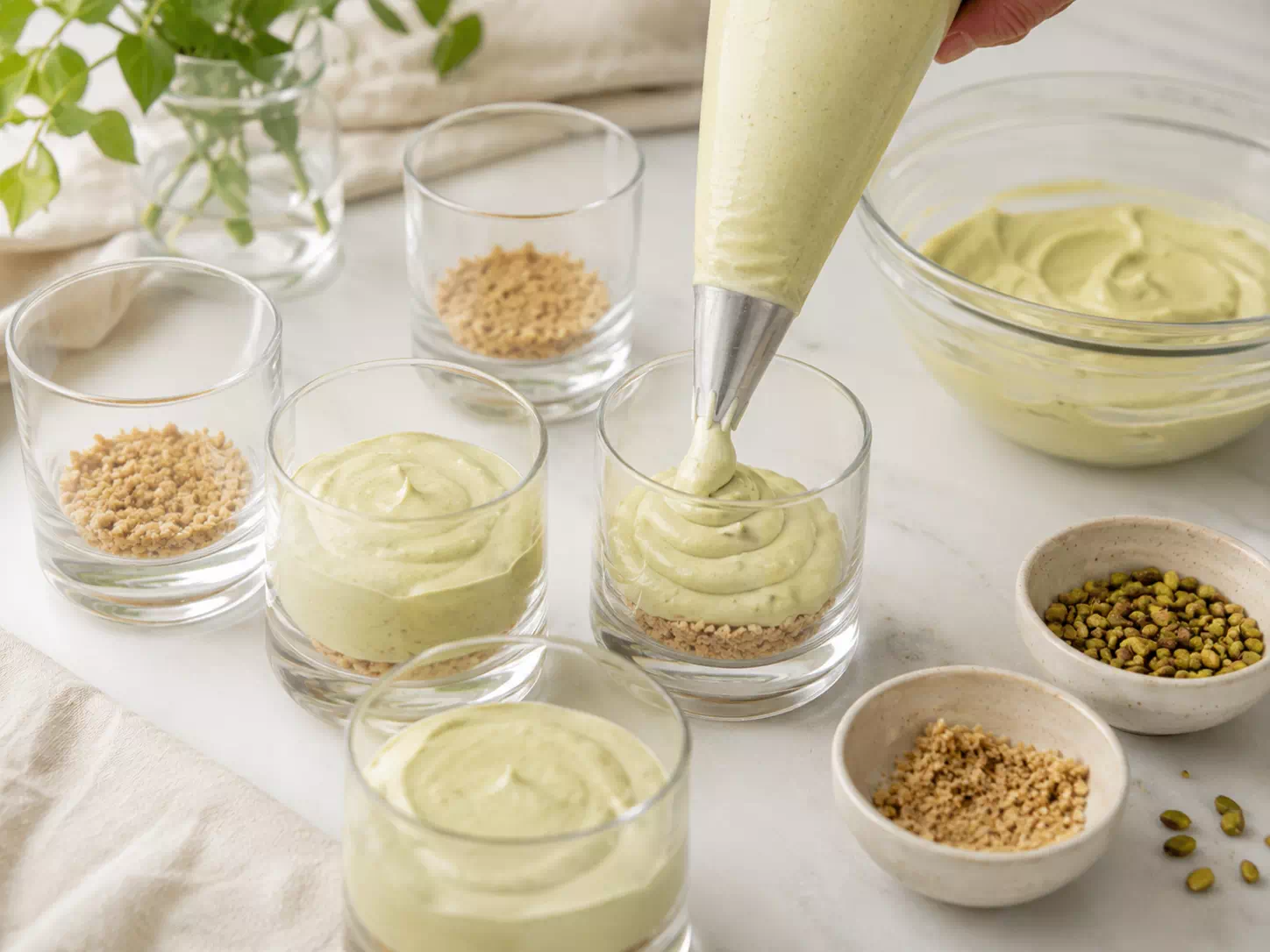
Once the crumble is completely cool, spread a small amount in the bottom of each glass. Add a generous layer of cheesecake cream. You can do this in two ways.
Simple option: crumble + pistachio cream + decoration.
For true pistachio lovers: crumble + cream + a small amount of pistachio paste in the center + more cream. When you dig in, that little hidden pistachio heart will appear. And yes, it’s as good as it sounds.
Place the cups in the refrigerator for at least 4 hours. If you can prepare them the day before, even better. If you prefer a different format, you can also assemble it in a 12-serving silicone mold instead of individual cups.
The decoration
Just before serving, add the following on top: chopped toasted pistachios, a drizzle of pistachio paste, or a few whole pistachios. You don’t need much more. In this dessert, less is more: we want the smooth, tempting pistachio cream, the crumble, and the small pieces of nut to shine through.
Why use isomalt in this cheesecake?
This recipe is a great example of how isomalt can be used for more than just artistic caramel. In this cheesecake, we replace added sugar with isomalt in both the cream and the crust.
But it’s important to understand one difference: substituting isomalt for sugar by weight doesn’t mean achieving the exact same sweetness. Isomalt is less sweet than sugar. Therefore, when formulating recipes with isomalt, we have two options: deliberately aim for a less sweet dessert, or keep the isomalt to add volume and supplement the sweetness with a small amount of another sweetener. In this recipe, we’ve chosen the first option because the pistachio has enough character to be the star of the show.
Approximate nutritional information
Values calculated for 6 small glasses, using full-fat cream cheese, Greek yogurt, heavy cream, 100% pistachio paste, 110g of isomalt throughout the recipe, and 25g of pistachios for decoration. Optional extra pistachio paste for decoration is not included.
Per small cup (1/6):
- Energy: 527 kcal
- Fats: 44.9 g
- of which saturated: 19.7 g
- Carbohydrates: 27.8 g
- of which sugars: 5.7 g
- of which polyols: 18.3 g
- Fiber: 3.7 g
- Protein: 11.9 g
- Salt: 0.45 g
The values are indicative and may vary considerably depending on the brands used.
Substitutions and alternatives
- Cream cheese → light cream cheese: the cheesecake will be slightly less creamy.
- Greek yogurt → skyr or thick natural yogurt: may be slightly more acidic.
- Whipping cream → cream with a lower percentage of fat: the less fat it has, the worse it will whip.
- Pistachio paste → 100% pistachio cream: check that it does not contain added sugar.
- Almond flour → ground almonds: will work practically the same.
- Pistachios → almonds or hazelnuts: will completely change the final flavor.
- Gelatin → agar-agar: we do not recommend substituting them 1:1, agar produces a different texture and requires other treatment.
- Vanilla → vanilla paste or seeds: adjust the amount according to your desired intensity.
Can I substitute the isomalt with another sweetener? Here, we need to be a little more careful. Not all sweeteners behave the same way, so we don’t recommend replacing 80g of isomalt with 80g of any other sweetener: an intense sweetener like sucralose provides a lot of sweetness with a minimal amount, while isomalt also adds bulk. Therefore, substitutions should be made considering the entire formulation, not just the sweetness.
How to make a lighter version
If you want to reduce the calories in the dessert, you can make some changes: use light cream cheese, choose Greek yogurt with a lower fat content, slightly reduce the amount of cream, prepare smaller glasses, or replace part of the crumble with chopped pistachios.
But remember: just because a recipe has no added sugar doesn’t automatically mean it’s low in calories. We have cheese, cream, almonds, and pistachios—ingredients that primarily provide fat and energy, as well as plenty of flavor.
Tips for making it perfect
- ✔️ Do not assemble the cups with the crumble still hot, it will lose its crunchy texture.
- ✔️ Do not bring the isomalt syrup to a boil, you only need to dissolve it.
- ✔️ Let the syrup cool slightly with the gelatin before adding it to the cream cheese.
- ✔️ The cream must be very cold to whip properly, without over-whipping.
- ✔️ Always taste the cream before assembling the cups in case you prefer to adjust the sweetness.
- ✔️ Respect the minimum 4 hours in the refrigerator; if you can, prepare it the day before.
- ✔️ Add the decoration just before serving so that it maintains its texture.
Frequently Asked Questions
Does it taste the same as a cheesecake made with sugar? Not exactly. Isomalt has a more moderate sweetness, so this version allows you to appreciate the pistachio flavor much more. If you’re looking for a sweetness similar to that of a traditional cheesecake, you can add a small amount of another sweetener suitable for baking.
Do I need to heat the isomalt to 160ºC? No. And this is precisely one of the differences compared to when we use it to make lollipops or decorations. In this recipe, we simply need to dissolve the isomalt in the water to properly incorporate it into the cream.
Can I add isomalt powder directly to cream cheese? It’s not the option we recommend. It can take longer to dissolve completely, and you might notice a grainy texture. Preparing it with water beforehand allows for a much more even incorporation.
Can I omit the gelatin? You can, but the cream will be much less stable. If you’re serving the cheesecake directly in glasses and prefer a very creamy texture, you could try a gelatin-free version by slightly increasing the amount of cream cheese. However, for this recipe, we prefer to use it because it gives us a firm yet creamy texture.
Can I use store-bought pistachio spread? Yes, but check the label carefully. Many commercial pistachio spreads list sugar among their first ingredients. If we want to keep our recipe sugar-free, we should choose a spread or spread that contains only pistachios, or at least carefully check its ingredients.
Can I make this the day before? Yes. In fact, it’s one of those recipes that benefits from resting. You can prepare the little cups the day before, cover them, and keep them in the refrigerator. Add the pistachios and the garnish just before serving so they retain their texture.
How long does it keep? Well covered and always refrigerated, you can keep it for 2-3 days. Because it contains dairy, it should not be left at room temperature for extended periods.
Can I freeze it? Yes, although the texture may change slightly upon thawing. If you wish to do so, freeze the cups without the final decoration and thaw them slowly in the refrigerator. Add the pistachios once thawed.
Can I make it in a large cake instead of individual cups? Yes, although you’d need to adjust the quantities slightly and, above all, ensure the cream is very stable. The advantage of using individual cups is that they allow you to maintain a very creamy texture without worrying so much about achieving a perfect cut.
A different kind of cheesecake to continue discovering isomalt
When we think of isomalt, it’s easy to immediately picture lollipops, clear candies, or artistic sugar decorations. But experimenting with this ingredient allows us to go much further. In this cheesecake, we use it in a completely different way: a crisp base and a smooth pistachio cream without adding any conventional sugar.
The bagged isomalt we use in this recipe is the same we use in all our sugar-free sweets, and in our kitchen utensils section you’ll find molds and accessories to prepare your own version at home.
If you try this recipe, let us know what you think and, above all, what isomalt recipe you’d like us to make next. Because we still have many things to experiment with.



Leave A Comment